
My blogging journey started on Blogger back in 2013.
I built a scrappy little blog to sell ClickBank affiliate products, wrote about what I knew, researched the gaps as I went, and one day it happened: my first sale. Around $110, from a guide called LinkedInfluence by Lewis Howes.
Before that I’d even cashed my first-ever check from blogging a whole $5 from an ad company called AdBrite.
Both of them came off that free Blogger blog, and I’ve never forgotten either one. You don’t forget the first time the internet hands you money for something you wrote.
But those free platforms taught me something it took me years to name: I didn’t actually own any of it.
I couldn’t make the site look the way I wanted.
The platform held the power. If something went sideways, it could flag or pull my blog and I’d have no say in it. And building rankings I actually controlled felt like pushing uphill.
So when The Owl Logic became a business instead of a hobby, free was off the table.
I wanted full control, and the full responsibility that comes with it.
If something breaks, it’s mine to fix. That’s not a downside to me. That’s the point.
And here’s the part that matters for you: can you still do what I did in 2013 – earn real money off a free Blogger blog today? Honestly, yes. But it’s far more competitive than you’re imagining, and that shift is exactly why getting this one decision right matters more now than it ever did when I stumbled into my first $110.
The honest answer
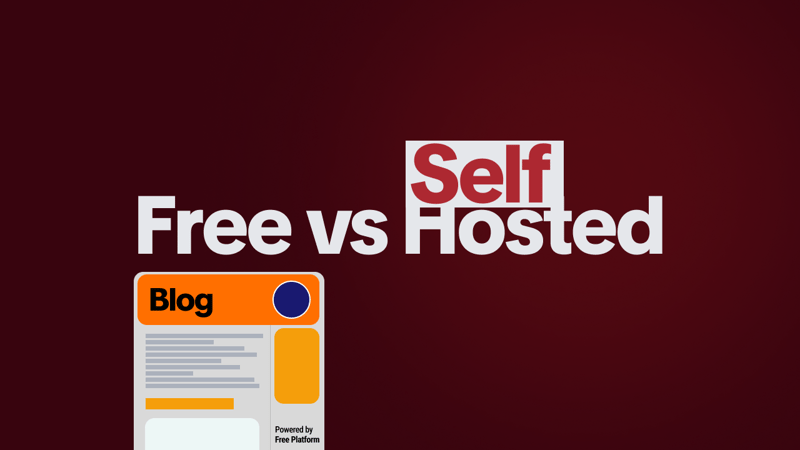
Free blogs (Blogger, WordPress.com, Medium) are genuinely fine for a hobby or testing an idea, but you don’t own them, you can’t fully monetise, and the platform can shut you down, restrict you, or put its own ads on your work.
Newsletter platforms like Substack and beehiiv are a newer middle option: free to start, and you get to keep your email list, but you still rent the platform and its reach.
My recommendation, straight: if you’re serious about building a blog you actually own, self-host on WordPress.org.
That’s what I run The Owl Logic on, and it’s what I’d tell you to start.
Cheap shared hosting runs around $3–10/month (if it’s annual), and for that you own everything, you can run any plugin, control your own SEO, and monetise freely.
What “free” actually means
A free blog isn’t really free. You pay with ownership.
When you publish on Blogger, WordPress.com’s free tier, or Medium, you’re building on land you rent.
The platform owns the house. They set the rules, they can change them, and they can ask you to leave. People lose years of work this way: a policy shift, a flagged account, a platform that pivots or shuts down, and the blog they built is gone with no appeal.
That’s the trade you’re really making. Not “free vs paid.” Rented vs owned.
But in 2026 that line isn’t quite binary anymore, and here’s the sorting question I use, call it the Landlord Test:
If your platform vanished overnight, what would you walk away with?
- Rent a classic free blog (Blogger, WordPress.com, Medium) → you walk away with nothing but your raw text.
- Use a newsletter platform (Substack, beehiiv) → you walk away with your email list. Your audience comes with you.
- Own a self-hosted site → you walk away with everything, because you never have to leave in the first place.
Rented, semi-owned, owned. Hold those three in your head, they decide everything below.
When a free blog is genuinely fine
Most “free vs paid” posts pretend free is always a mistake so they can funnel you to hosting. That’s dishonest, so let me be straight: free is the right call in a few real situations.
- You’re testing an idea. Not sure you’ll stick with blogging? Spin up a free blog, write a few posts, see if you enjoy it before spending a cent.
- It’s purely a hobby. You write for the joy of it, with no plan to earn or grow a business. Free is perfect, don’t overcomplicate it.
- You want distribution, not a home base. Medium is genuinely good for getting writing in front of an existing audience. Just know you’re borrowing their reach, not building your own.
If that’s you, stop reading and go write. You don’t need hosting yet. (Still deciding whether blogging is even worth the effort? That’s is blogging worth it in 2026.)
But aren’t Substack and beehiiv “blogging” now?
Fair question, and this is where “free blogging” quietly changed.
In 2026, when people say “free blog,” a lot of them mean Substack or beehiiv. These are newsletter-first platforms, but they publish web-readable, Google-indexable archives, so yes, they count as blogging now, and any honest comparison has to include them.
Here’s the part most posts skip. They don’t fit cleanly into “rented vs owned”: they’re the semi-owned middle from the Landlord Test, and the distinction matters:
What you actually own: your list. Both let you export your subscribers and leave. That’s real ownership Blogger and Medium never gave you: walk away and your audience comes with you. If email is your core asset, that’s a genuine advantage.
What you’re still renting: reach, rules, and SEO control. Discovery runs on their network (Substack’s recommendation engine especially). You get far less control over technical SEO than self-hosted WordPress, and on the free tiers you’re boxed in on monetization.
Substack
free to publish, unlimited email. But it takes 10% of any paid-subscription income on top of card fees, and connecting a custom domain is a one-time ~$50. Best when your model is a paid newsletter, not SEO traffic.
beehiiv
free up to 2,500 subscribers, and the free tier even includes a custom domain, website, and basic SEO, genuinely more blog-like out of the box.
The catch: you can’t monetize on the free plan at all, that needs the paid tier, and if you’ve outgrown the free 2,500 subscribers, the tier you actually land on runs ~$89/month, not the advertised $49.
The trade-off: once you’re paying, beehiiv takes 0% of your subscription revenue, where Substack takes 10%.
So where do they land?
If you’re building an audience and a newsletter first, a newsletter platform is a legitimate, often better, starting home than a classic free blog, because you own the list.
If you’re building an SEO-driven content site you fully control and monetise freely, self-hosted WordPress still wins.
Plenty of serious people run both: a self-hosted blog as the owned home base, plus Substack or beehiiv for the newsletter.
Where free starts costing you
The moment you get serious, about growing, ranking, or earning, the rented and semi-owned tiers start charging you in limits instead of dollars.
Control
You can’t make the site truly yours. Limited themes, limited customisation, no custom functionality. You bend your blog to fit the platform instead of the other way around.
The platform can pull the plug
Break a rule, even by accident, and your blog can be restricted or removed.
You have no ownership and little recourse.
Everything you built sits at someone else’s discretion. (The one thing you can protect on a newsletter platform is your list, so export it regularly.)
SEO and authority
This one’s misunderstood, so let me be precise. Free platforms can get indexed and rank.
Google doesn’t ignore Blogger, WordPress.com, or a Substack archive.
The problem is twofold:
- you get far less control over your own SEO (limited plugins, technical settings, structured data), and on borrowed-reach platforms like Medium especially, every post builds the platform’s domain authority, not yours.
- You can rank and still be growing someone else’s asset. Self-hosting puts both your rankings and your authority back in your hands.
Monetization
Free platforms don’t stop you from earning.
They decide how you earn. Their ad program or none, their subscription rails, their cut of every payment, their terms deciding what you can promote.
Affiliate links might be allowed today and restricted tomorrow, because the interpretation is entirely theirs.
The thing that turns a blog into income, full control over your own offers, is the one thing you never own on a free platform.
The three tiers, side by side
One question sorted them; here’s the whole picture in one place.
| 🏠 Rented | 🔑 Semi-Owned (your list, their house) | 🏡 Owned | |
|---|---|---|---|
| Examples | Blogger, WordPress.com (free), Medium | Substack, beehiiv | Self-hosted WordPress.org |
| Walk away with… | Nothing but your raw text | Your email list (exportable) | Everything, you never have to leave |
| Cost | Free | Free tier* | ~$3–10/mo for hosting + ~$10–15/yr domain |
| Own the platform? | No | No | Yes |
| Own your audience? | No | Yes (portable list) | Yes |
| SEO control | Minimal | Limited (beehiiv free = custom domain; Substack = ~$50) | Full |
| Monetisation | Restricted | Capped on free (Substack takes 10%; beehiiv free = none) | Unlimited |
| Best for | Hobby, testing, borrowing an audience | Newsletter / audience-first creators | Serious SEO + income blogs |
Read the table and it points one way for most people: the “Owned” column is the only one where every answer is in your favour.
That’s why my recommendation lands where it does, self-hosted WordPress. The other two tiers aren’t wrong, they’re just situational. Owned is the one you don’t outgrow.
The serious choice: self-hosted WordPress
If you’re building something real, the answer is self-hosted WordPress.org on cheap shared hosting.
You own the site outright, run any plugin, control your SEO, and monetize however you want.
It’s the same foundation nearly every professional blog is built on, and it’s cheaper than people expect.
Shared hosting runs roughly $3–10/month, which is the entire “cost” of going self-hosted.
- Hostinger is the cheaper option if money’s tight. A little less polish, fully legitimate, and a low-cost way to own your platform from day one.
- Bluehost is where I’d send a beginner first: it’s built around WordPress, the setup is genuinely beginner-friendly, and it handles the technical side so you can focus on writing. The “this is what I’d start on” pick.
Here’s the catch, and it’s the same thing I chose on purpose: self-hosting means you own the responsibility too. Updates, backups, security: they’re yours now.
To me that’s the whole appeal: if something breaks, I can fix it, because it’s mine. If that sounds like a lot, it isn’t: good hosting handles most of it, and a couple of free plugins handle the rest.
A quick word on Ghost
WordPress isn’t the only platform you can truly own.
Ghost is the other one worth knowing, and it’s genuinely good. It’s open-source, self-hostable, and built around publishing plus native newsletters and paid memberships.
The killer detail: Ghost takes 0% of your subscription revenue (you only pay standard Stripe fees), where Substack takes 10%. If a paid newsletter is your whole model, that gap is real money.
So why isn’t it my pick for a beginner?
Two main reasons.
- Self-hosting Ghost is more technical than WordPress: it runs on Node.js and expects you to be comfortable with a command line, which is the opposite of what most people starting out want.
- The easy route, Ghost(Pro), starts at $15/month, but that Starter tier can’t charge readers and locks you to one theme, so the real price for a monetized Ghost blog is the $29/month Publisher plan. That’s five to ten times what cheap shared WordPress hosting costs, for a platform with no plugin ecosystem at all – just integrations, most of them gated to paid tiers.
My take: if you’re newsletter-and-membership-first and comfortable with a bit of tech, Ghost is a brilliant choice, arguably better than Substack.
For everyone else building a general blog they own, WordPress is still where I’d start you.
Questions people actually ask
Is a free blog worth it?
For a hobby, testing an idea, or writing with no plan to earn, yes, genuinely. Free platforms let you start writing today at zero cost.
But you don’t own the blog, you can’t fully monetise it, and the platform can restrict or remove it.
The moment you get serious about growing or earning, the limits cost you more than cheap hosting ever would.
Is Substack or beehiiv better than a free blog?
For building an email audience, often yes. Unlike Blogger or Medium, you can export your subscriber list and take it with you, so you own the one asset that matters most.
But you still rent the platform’s reach and SEO control, and free tiers limit monetisation (Substack takes 10% of paid income; beehiiv’s free plan can’t monetize at all).
If your goal is an SEO content site you fully own, self-hosted WordPress is still the stronger foundation, and many creators run both.
Can you make money on a free blog?
A little, sometimes, but free platforms cap how you earn -restricted ads, limited affiliate freedom, no real control over your own offers. If income is a goal, free will hold you back. Self-hosting removes the ceiling: you can run any monetisation method you want, fully under your control.
How much does self-hosting cost?
Around $3–10 a month for shared hosting, plus roughly $10–15 a year for a domain. That’s the whole cost of owning your platform, cheaper than most subscriptions, and the foundation that lets you grow and earn without limits.