
I failed at blogging for years. Not once or twice like 10+ blogs, launched with some version of enthusiasm, pushed for a few weeks or a few months, watched nothing happen, walked away.
I’d done it so many times I’d basically forgotten what a blog was even for. It became a thing I started and abandoned, not a thing I ran.
Then I started one more blog. And for the first time, it didn’t die but it grew.
Nothing about me changed in between.
I didn’t get smarter, better at writing, or more talented.
I changed one thing: I stopped waiting for Google to notice me and went and got the traffic myself, mostly from social channels like Pinterest, Quora, Reddit and etc, while the SEO slowly started to compound in the background.
And I didn’t quit.
That’s the entire difference between the blogs that failed and the one that didn’t.
That’s what this post is really about. Because most blogs don’t fail because the person wasn’t good enough.
They fail for a reason that’s far more boring, and far more fixable.
The honest answer
Most blogs fail for one core reason:
People quit in the first 6–12 months, right before SEO traffic compounds. It’s almost never talent.
Under that sit the fixable causes, no clear niche, ignoring what searchers actually want, posting inconsistently, and never promoting outside Google.
The fix is two-part: treat blogging as a 12–18 month slow game so you don’t quit during the slow stretch, and drive early traffic yourself, relevant communities, places your readers already are – instead of sitting and waiting for Google to find you.
Survive the compounding gap and you’ve already beaten most blogs.
The real reason: you quit right before it works
Here’s the part nobody frames honestly. A new blog earns almost nothing for months. Not because the content is bad. Because Google has to learn to trust it, and that trust builds slowly – over a year, not a weekend.
Months 1 through 6 feel like shouting into an empty room.
You publish, you wait, not much happens.
Then months 6 through 12 arrive, and that’s where most people, exhausted and quietly convinced it’s never going to work, walk away.
The cruel part: they quit right before the compounding kicks in.
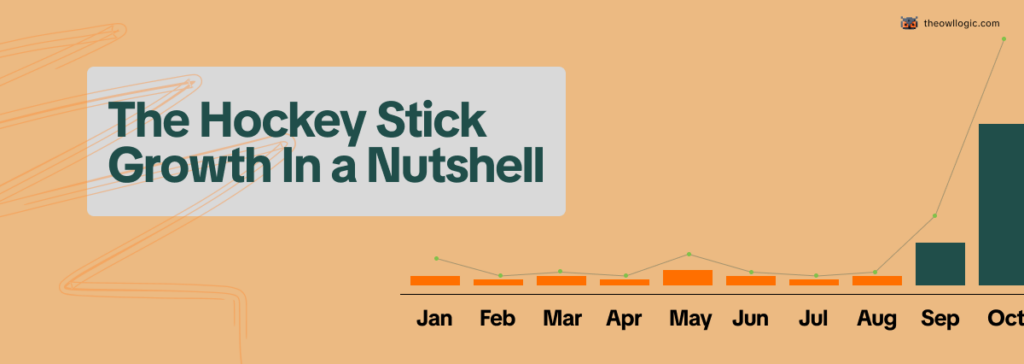
The traffic curve on a blog isn’t a straight line. It’s flat, flat, flat — then it bends upward (like a hockey stick).
That bend happens somewhere in the 9–18 month window for most sites, depending on how competitive the niche is and how consistently they’ve been publishing.
Quit during the flat part and you’ll swear blogging is dead.
It wasn’t dead. You left early.
So the thing everyone calls “blogging failure” isn’t really a talent problem. It’s a survivorship problem.
The blogs that “made it” aren’t necessarily better, they’re the ones still standing when the curve finally bent.
I wrote about this specific dynamic in is blogging worth it in 2026, the short version is that it works, if your approach does. But approach starts with not quitting.
The fixable mistakes sitting underneath
Quitting is the meta-reason.
But people quit because of things that are completely fixable, problems that make the slow stretch feel hopeless when they didn’t have to.
No clear niche
A blog about everything is a blog about nothing – to readers and to Google.
You can’t build trust with an audience that doesn’t know what you’re about, and you can’t rank for topics you haven’t earned authority in.
Pick a lane narrow enough that someone can actually describe what your blog is for in one sentence.
Ignoring search intent
This is writing what you feel like instead of what people actually search for.
If nobody’s looking for your topic, nobody finds it. Ranking in search isn’t about writing quality alone, it’s about matching real questions that real people type and then answering them better than what’s currently sitting at the top.
Most of how to write a blog post that ranks comes down to this one thing.
Inconsistency
Three posts in week one, then silence for a month, then a burst, then silence again.
The compounding only works if you keep feeding it. Publishing is the input; traffic is the delayed output.
A steady, modest pace, one post a week, even one a fortnight, beats a heroic burst followed by a ghost town every time.
No promotion
Publishing and waiting for Google is the slowest possible path, especially in year one when Google doesn’t trust you yet.
You need to bring the traffic yourself while the SEO builds.
Reddit, forums, communities, email, places where your future readers already are.
None of these require talent. They require knowing they’re the traps before you fall into them.
How to avoid it (what actually worked)
Two things kept The Owl Logic alive where my earlier blogs died. Neither of them was a secret.
Commit to the timeline before you start. I decided before launching that this was a 12–18 month game, not a 12-week one.
That single expectation change is what stops you from quitting in month 8 when results feel slow.
You can’t be crushed by slow results you already planned for. The people who quit aren’t weaker, they just expected a different timeline.
Set the right one at the start and the slow stretch stops feeling like failure.
Drive your own traffic instead of waiting. This is the bigger one.
A brand-new blog usually sees near-zero traffic for months, but you don’t have to accept that.
I went where my readers already hang out, Reddit threads, conversations already happening around the topics I was writing about, and brought them in directly.
That early traffic does two jobs at once: it gives you real readers and real momentum (which is what actually keeps you going), while Google slowly warms up to your site in the background.
By the time the SEO starts compounding, you’re not starting from zero. You’ve already got proof the thing works.
You don’t have to white-knuckle your way through a silent first year.
Manufacture the early signs of life yourself, stay long enough for the compounding to take over, and you’ve already done what most bloggers couldn’t.
Questions people actually ask
What percentage of blogs fail?
Most blogs die from neglect, not competition – the person just stops.
There’s no reliable stat for how many (online numbers are mostly unsourced guesswork), but the large majority quit within the first year. That’s a fixable problem, unlike losing a search ranking war.
Why do new bloggers quit?
Because the early months demand real effort while paying almost nothing back, and the compounding that makes blogging worth it doesn’t show up until months 6–12.
People quit during the flat stretch – right before the curve bends. Add in unrealistic expectations (expecting traffic in week three, expecting Google to find you immediately) and the gap between hope and reality is what burns people out.
It’s rarely that the blog was bad. It’s that they didn’t know how the timeline actually worked.
How long before a blog gets traffic?
From Google alone, often 6–12 months before meaningful, compounding search traffic arrives.
Sometimes longer in competitive niches.
But you don’t have to wait that long for any traffic – by promoting in relevant communities such as reddit, quora, facebook from from day one, you can pull real readers in the first few months while SEO builds underneath.
That early traffic matters more than most people think, because it’s often what keeps a new blogger going long enough to reach the compounding stage. The two strategies aren’t competing. They’re layered.